Summary
On February 12, NTRAC reviewed the latest version of the 39° North / Kings Beach Town Center project. No vote was taken.
Key issues raised included:
- A 445-foot building length where 250 feet is the Town Center standard — requiring a formal variance
- Whether 64 “achievable” workforce housing units reflect local wages and family needs
- How 38 condo-hotel units affect visitor concentration and short-term rental dynamics
- Whether new commercial and ballroom space complements — or competes with — existing community assets
- Relocation of the 22 Salmon Avenue public parking spaces into the hotel parking structure
- Questions about infrastructure capacity, snow storage, and utility upgrades
- Evacuation load and regional wildfire safety
- Whether the project proceeds under TBAP Conformity (Addendum) or a new circulated Draft EIR/EIS
📅 Next step: February 24 – Tahoe Basin Design Review Committee
This is where variance findings and Town Center design standards begin to be formally evaluated.
Public comment is allowed (typically three minutes per speaker).
If scale, housing fit, parking access, visitor intensity, infrastructure capacity, or environmental review pathway matter to you — this is the next opportunity to speak.
Introduction
On February 12, the North Tahoe Regional Advisory Council (NTRAC) reviewed the latest version of the 39° North / Kings Beach Town Center project.
This was an informational session — not a vote.
County staff presented updates, NTRAC members asked technical questions, and neighbors spoke directly about how this proposal could reshape Kings Beach.
For those who want to review the materials directly:
- NTRAC February 12 Agenda Packet & Presentation
- County 39° North Project Page
- Kings Beach Center & Eastern Gateway Agreements Page
The presentation covered revised building designs, workforce housing configuration, relocation of the Salmon Avenue parking lot, infrastructure considerations, and the environmental review pathway. But the most important part of the evening wasn’t the slides.
It was the exchange.
- Neighbors raised practical questions about daily life — parking operations, snow storage, evacuation routes, local wages, and storefront identity.
- NTRAC pressed on variance findings, compatibility standards, infrastructure capacity, and review process.
- Staff referenced the next procedural step — the February 24 Tahoe Basin Design Review Committee meeting.
February 24 marks the next formal step in design review.
This is where the proposed variance and Town Center design compatibility findings begin to be formally evaluated under the Tahoe Basin Area Plan. Community voices matter here — particularly on questions of scale, compatibility, and whether required findings can be made.
What emerged on February 12 was not a simple yes-or-no debate.
It was a room trying to determine whether this project is clearly defined — in scale, housing mix, infrastructure capacity, environmental review path, and public commitments — before it advances further.
Below is a section-by-section look at some of the key issues neighbors and NTRAC members raised.
1️⃣ Scale, Length & the Variance Question
The longest and most sustained discussion of the night centered on one number: length.
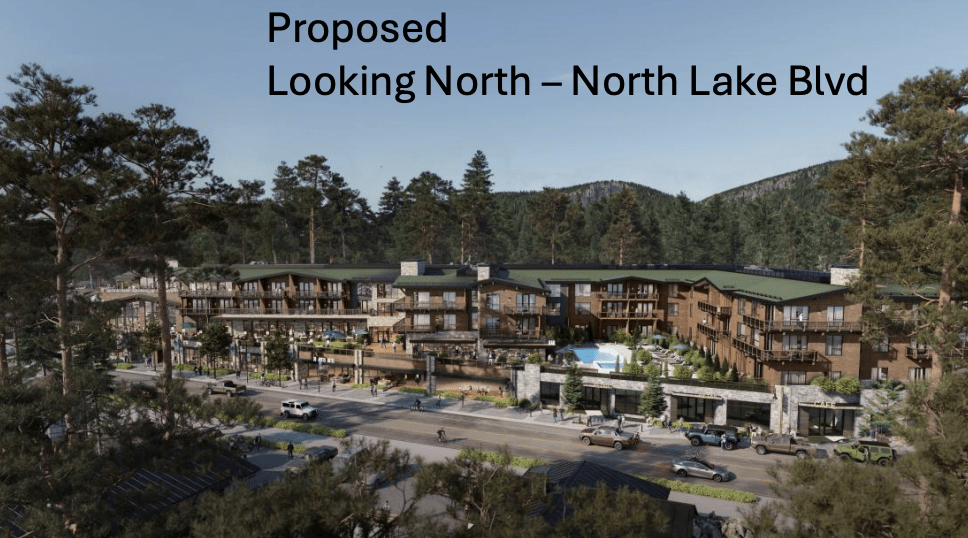
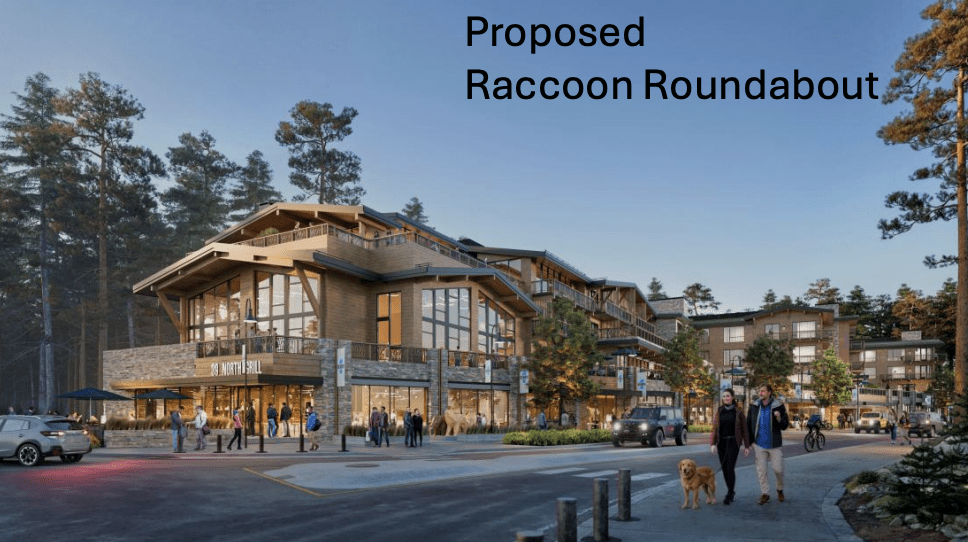
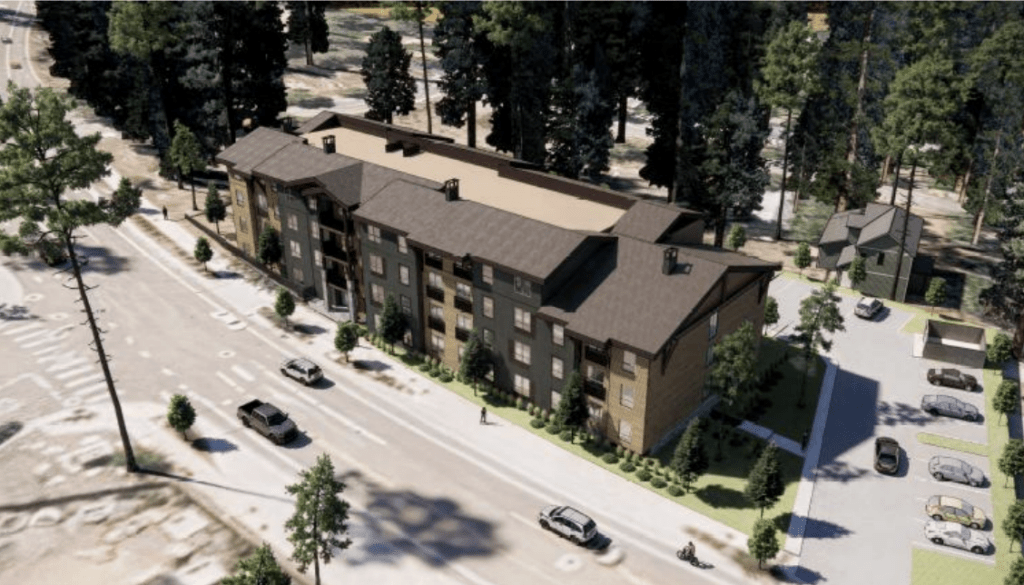
The proposed building measures approximately 445 feet. The Town Center standard under the Tahoe Basin Area Plan (TBAP) allows 250 feet. Exceeding that limit requires a formal variance — nearly 200 feet beyond the 250-foot standard.
What neighbors kept returning to was not height alone — which has been reduced from earlier versions — but horizontal mass and pedestrian experience.
Residents raised specific concerns about:
- Walking alongside a continuous frontage
- Pedestrian scale and village character
- How the north and east elevations would present to the street
- Whether the building could be visually broken into smaller segments
One resident described it as:
- “a cruise ship in a village.”
Another noted it was:
- “about twice the length of Safeway.”
NTRAC members examined the issue through the variance findings themselves:
- How does a 445-foot structure meet compatibility standards?
- Could upper stories step back?
- Is the underground garage driving the footprint?
- What flexibility remains in the configuration?
The applicant stated that underground parking largely determines the building’s length and layout. Breaking the structure apart would require redesigning the garage below. They also emphasized that prior versions were taller and that reductions have already occurred.
The discussion moved beyond design preference. It centered on whether a building nearly 200 feet longer than the standard can satisfy required variance findings — including compatibility and pedestrian scale — under the TBAP framework.
That question now sits before the Tahoe Basin Design Review Committee.
2️⃣ Workforce Housing: “Achievable” — But for Whom?
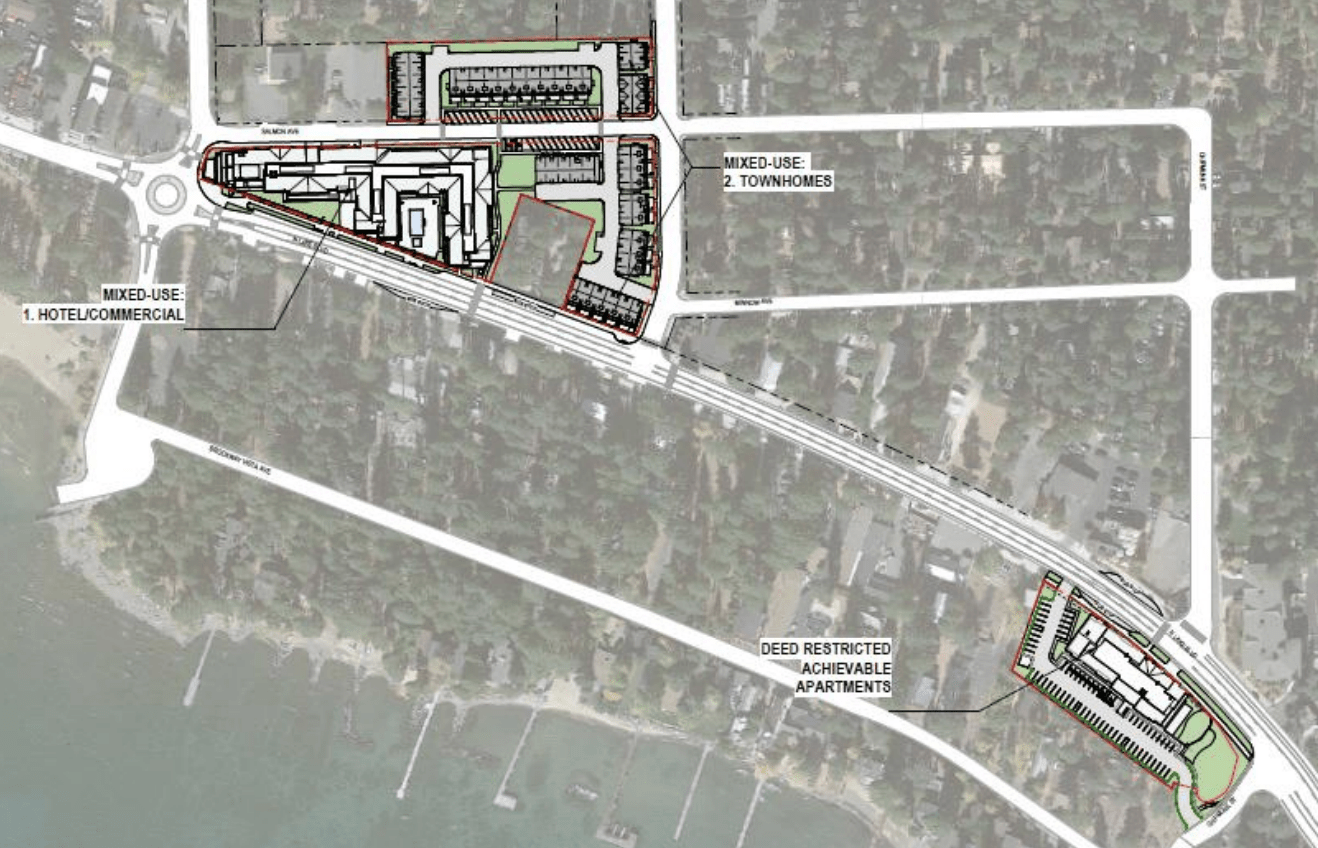
The proposal includes 64 deed-restricted workforce housing units on a separate parcel. County staff described them as “achievable” housing within the project’s overall program.
In the room, the terminology itself became part of the discussion.
One resident stated directly:
- “Achievable is not affordable.”
Several speakers questioned whether income qualification standards — based on Placer County Area Median Income (AMI) thresholds — reflect what people working in Kings Beach actually earn.
There were also comparisons to workforce housing projects in Tahoe City. Speakers noted those projects include more family-sized units and a broader mix of configurations. They asked why the Kings Beach proposal appears weighted toward smaller units — and whether that supports long-term residency.
Concerns centered on:
- Alignment between qualification standards and local incomes
- Unit mix and suitability for families
- Whether the housing meaningfully serves restaurant workers, teachers, and service employees
No one argued against building workforce housing.
The discussion focused on fit — whether this housing reflects Kings Beach’s workforce realities, or whether it functions primarily as a required program component within a larger hospitality project.
Does this housing actually match the people who live and work in Kings Beach?
3️⃣ Condo-Hotel: Form, Flexibility & Visitor Intensity
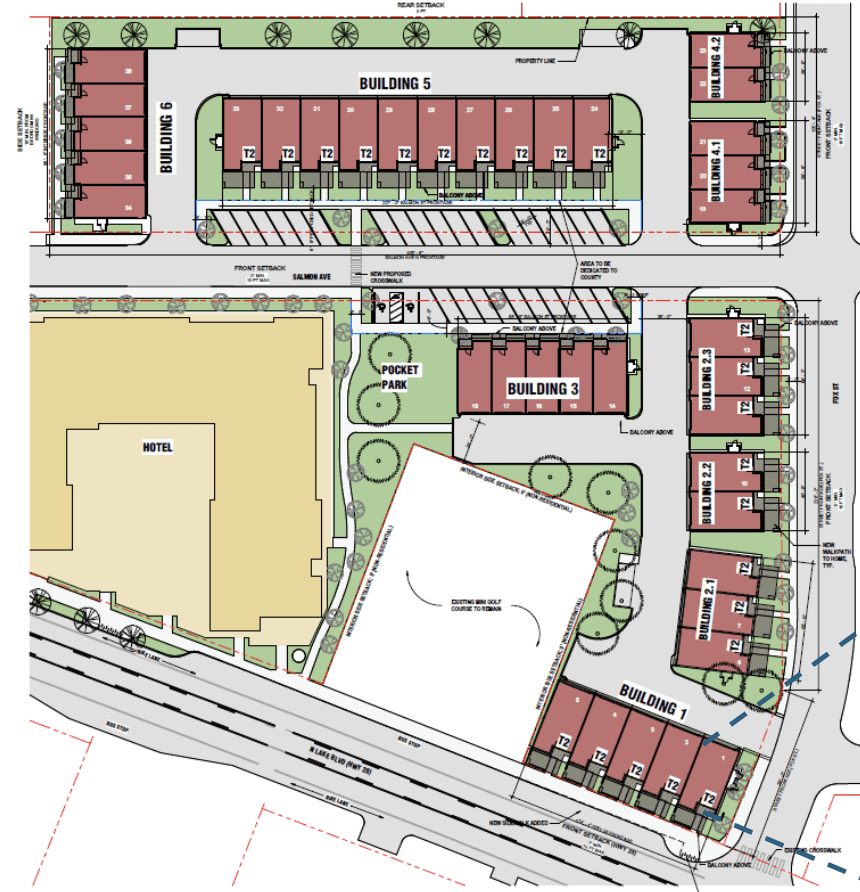
Separate from the 132-room hotel, the proposal includes 38 for-sale condo-hotel units located along North Lake Blvd., Fox Street, and Salmon Avenue. These are three and/or four-story structures that would operate within a centralized management program.
NTRAC’s discussion began with form.
Members asked whether the massing needed to remain uniform across the row:
- Could portions step down?
- Could four-story elements vary?
- Could the structure break visually so it does not read as one continuous wall?
The applicant indicated that the layout reflects prior refinements and that changes to the stacking configuration would affect other components of the project. The configuration presented at NTRAC is the one currently under review.
Discussion then turned to use.
Although staff described them as distinct from independent short-term rentals due to centralized professional management — including limits on owner occupancy — residents questioned how that distinction translates in practice.
Concerns included:
- Whether these units would operate similarly to short-term rentals in daily experience
- How they relate to existing STR limits in the area
- Whether they increase concentrated visitor presence in the Town Center core
The conversation was not framed as opposition to tourism. It focused on concentration and cumulative effect.
Form influences scale.
Use influences intensity.
Together, they shape whether the Town Center functions as a mixed-use core — or becomes more visitor-oriented over time.
4️⃣ Commercial Space, Ballroom & Town Center Identity
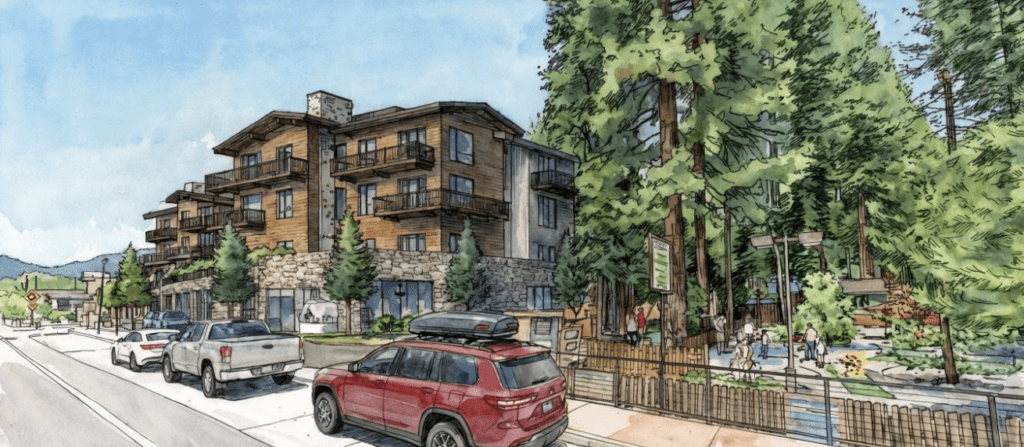
The hotel program includes approximately 27,000 square feet of ground-floor commercial space — restaurant, retail, and lobby areas — along with roughly 8,700 square feet of conference and meeting space.
During public comment, one resident stated:
- “We already have an event space. We would be competing against ourselves.”
The reference was to the North Tahoe Event Center across the street.
The concern expressed was not about whether events belong in Kings Beach. It was about proximity and overlap — how private meeting space across from a publicly operated event center could influence activity, booking patterns, and Town Center use.
Retail drew similar questions.
Neighbors asked what types of tenants are realistically expected in the ground-floor spaces. Comments included:
- “Local vendors so locals can afford it too.”
- “Is it going to be a Patagonia? A North Face?”
Speakers questioned whether commercial space integrated into a hotel development would naturally skew toward visitor-serving tenants, and whether lease structures might make it difficult for locally owned businesses to operate there.
NTRAC’s discussion in this area was less about tenant identity and more about how the commercial program integrates into the Town Center fabric — including pedestrian frontage, activity along the street, and relationship to adjacent uses.
The underlying theme raised by both residents and advisory members was balance:
- If commercial space is embedded within a hospitality-focused project, how does it function within an existing Town Center that already includes public civic assets and locally owned storefronts?
That question relates not to branding — but to how use, location, and pedestrian activation interact in practice.
5️⃣ Public Parking: The 22 Salmon Avenue Spaces
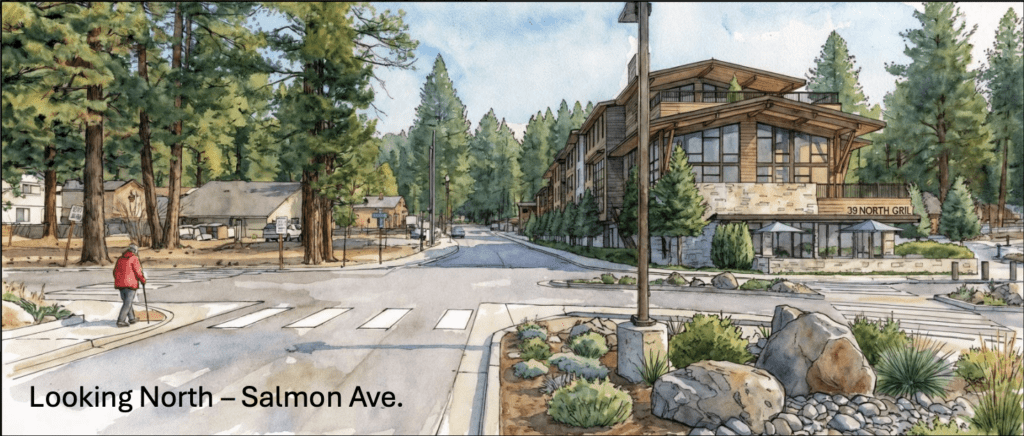
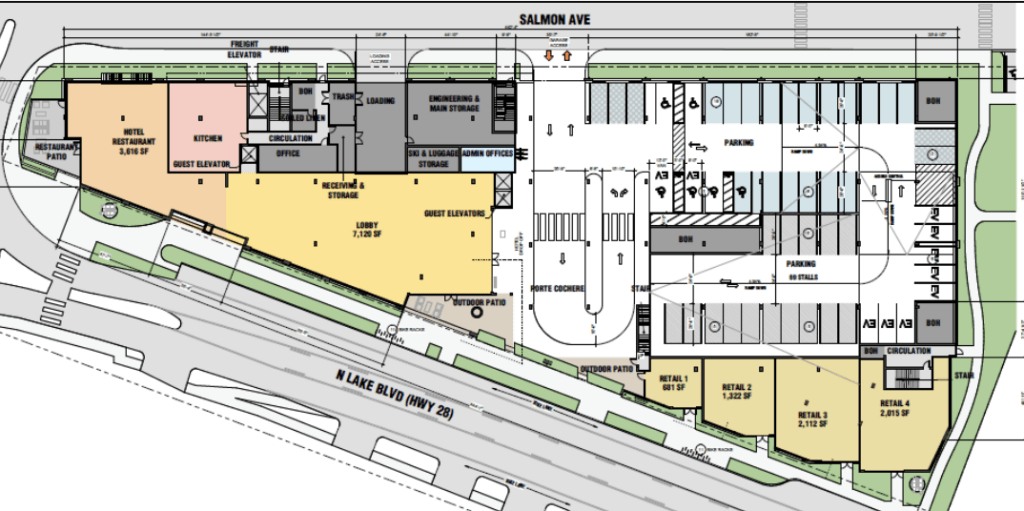
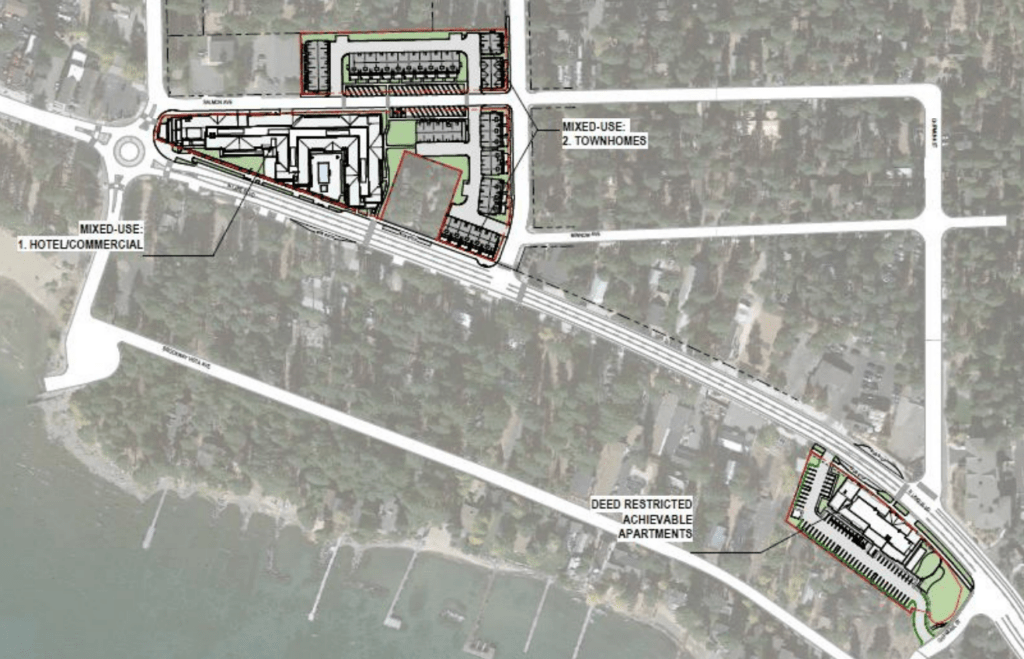
One of the changes discussed involves the 22-space Salmon Avenue public parking lot adjacent to the Post Office, which under the proposal would be removed and incorporated into the condo-hotel site.
County staff stated:
- “The 22 parking lot spaces will go into the parking structure and permanently dedicated for public parking.”
Under the proposal, the existing surface lot would be removed and those 22 public spaces relocated into the hotel parking structure. Staff also noted that approximately 18 informal parallel street spaces would be formalized into roughly 29 striped public spaces, including ADA spaces.
On paper, the total number of public spaces increases. In the room, the discussion focused on function rather than totals.
Residents spoke about how the Salmon lot supports routine Post Office access — particularly in a community where many rely on PO boxes rather than home mail delivery. Its current location allows short, frequent stops directly adjacent to the Post Office.
Residents asked:
- How will the relocated spaces function day to day?
- Will they be clearly accessible as public parking?
- How will circulation and management work within the structure?
The issue was not simply numerical. It was whether relocating the 22 spaces preserves the same day-to-day accessibility that currently exists.
That operational question will continue to be evaluated as design review advances.
6️⃣ Infrastructure & Utilities: Capacity, Snow & System Questions
Infrastructure concerns surfaced through specific comments — not broad hypotheticals.
During public testimony, a resident referenced a Liberty Utilities substation upgrade and stated that costs discussed publicly could be in the range of $25 million. They questioned whether new development intensity in the area is contributing to expanded electrical infrastructure demands.
The question raised in the room was not whether utilities need modernization — but whether increased project scale affects timing, cost allocation, or system capacity.
NTRAC members also asked about infrastructure capacity more broadly — including water, sewer, and total system load — though no formal determinations were presented at this session.
Winter operations were raised just as directly.
- One speaker asked:
- “Where is snow storage?”
With underground parking and expanded building coverage, residents questioned:
- Whether snow can be stored fully on site
- Whether hauling would be required
- How pedestrian access functions during peak winter conditions
These were practical, mountain-town questions.
The underlying issue raised was operational capacity:
Are existing systems sized for this level of build-out — or will expansion be required?
7️⃣ Wildfire, Evacuation & Regional Safety
The tone shifted when wildfire and evacuation concerns were introduced.
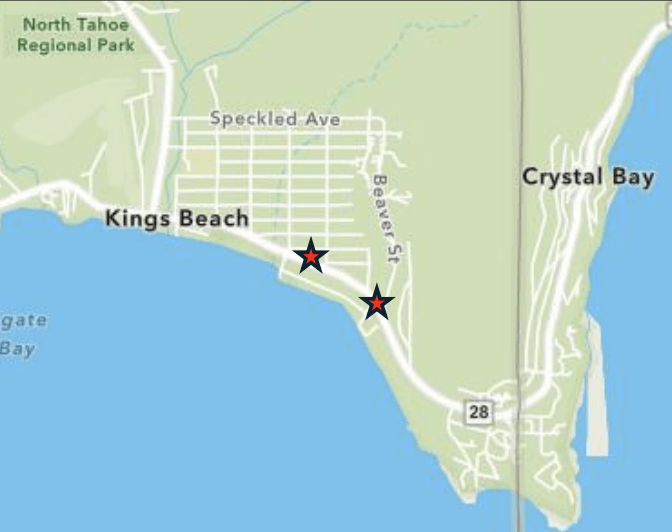
A resident from Incline Village noted that Highway 28 functions as a regional corridor, not just a local street. Development decisions in Kings Beach affect neighboring communities that rely on the same roadway during an emergency.
Concerns included:
- Cumulative evacuation load during peak occupancy
- Seasonal overlap between fire season and peak tourism
- Visitor familiarity with evacuation routes
NTRAC members also asked about emergency operations at full occupancy, including evacuation timing and whether the project design accounts for high-occupancy scenarios.
The discussion focused on capacity under stress.
- If Highway 28 serves multiple communities during an emergency, how is increased lodging occupancy factored into regional evacuation planning?
Those considerations remain part of the review.
8️⃣ Environmental Review Path: TBAP Conformity or Draft EIR/EIS?
Amid the design discussion, a procedural question surfaced that carries significant weight:
What environmental review pathway will ultimately govern this project?
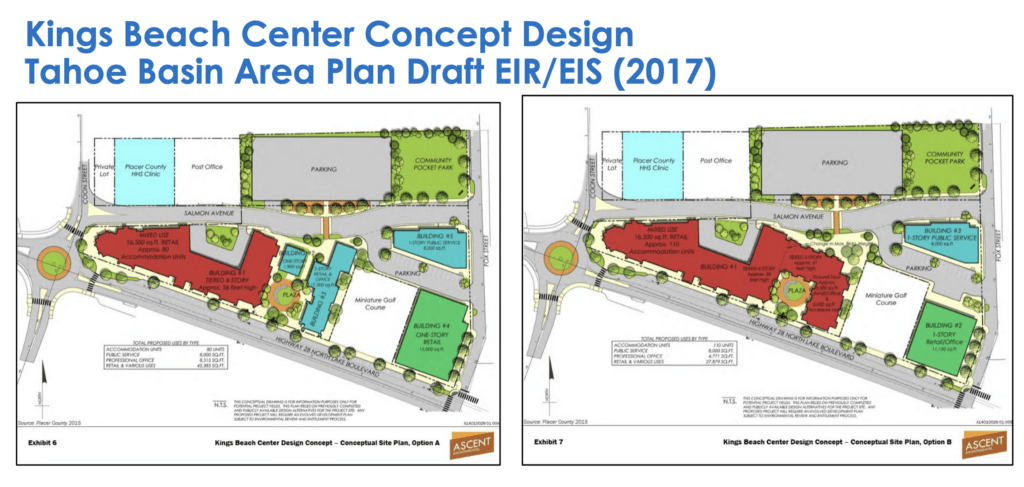
County staff referenced review under Tahoe Basin Area Plan (TBAP) Conformity and discussed the potential use of an Addendum rather than preparation of a new circulated Draft EIR/EIS.
NTRAC members asked clarifying questions:
- Which pathway is currently being relied upon?
- Under what conditions would additional environmental documentation be required?
- Has a formal determination been made?
The distinction matters for both review depth and public participation.
A Draft EIR/EIS is circulated publicly and includes structured analysis of impacts and alternatives before approvals advance. An Addendum does not require new public circulation if prior environmental analysis is deemed sufficient.
Staff indicated that additional analysis is ongoing.
Several speakers referenced prior milestone language calling for submission of a Draft EIR/EIS by March 31, 2026, and asked how that aligns with reliance on TBAP Conformity review.
That alignment question was not resolved during this session.
The underlying issue raised in the room was straightforward:
- Will updated impacts — including traffic, evacuation modeling, infrastructure capacity, and cumulative visitor intensity — be evaluated through a new circulated environmental document,
- or addressed through a conformity determination based on earlier analysis?
That procedural choice will influence how impacts are analyzed and what formal public engagement opportunities occur moving forward.
What Happens Next
On February 24, the Tahoe Basin Design Review Committee will consider the project under the Town Center standards of the Tahoe Basin Area Plan.
This is where the proposed variance — allowing a building nearly 200 feet longer than the standard — will begin to be formally evaluated.
The Committee must determine whether required findings can be made, including compatibility and pedestrian scale.
This meeting does not finalize the project.
But it sets direction for how required findings are interpreted and applied.
Public comment is allowed (typically three minutes per speaker).
For residents concerned about scale, housing fit, visitor intensity, commercial identity, parking relocation, infrastructure capacity, evacuation load, or the environmental review pathway — February 24 is the next opportunity to speak directly to the standards that will govern the outcome.
Design Review is where adopted standards are formally applied. How those standards are interpreted — and whether required findings can be made — will shape the trajectory of this project.

Leave a Reply