On February 24, 2026, the Tahoe Basin Design Review Committee (TBDRC) spent more than three hours reviewing the latest version of the 39° North proposal in Kings Beach.
During the meeting, County staff also clarified that the project may ultimately proceed through a Tahoe Basin Area Plan conformity review rather than a separate project-level environmental review — a distinction that affects how the proposal may be evaluated as it moves toward future approvals.
While updated architectural materials were presented, the conversation quickly moved beyond aesthetic details.
Committee members focused on a broader question: how the project would function as part of Kings Beach’s Town Center.
The discussion explored several aspects of the proposal, including building form and scale, the relationship between buildings and the street, the role of commercial space, and the livability of proposed housing units. Throughout the meeting, members examined how the development would interact with the surrounding pedestrian environment and public spaces.
At several points, the discussion also touched on how the project’s size and orientation could shape day-to-day conditions on nearby streets, including Salmon Avenue — where the Kings Beach Post Office sits directly across from the site. Members noted that winter shading along this block could influence pedestrian access, deliveries, and everyday street activity in front of the post office.
The meeting also included clarification from County staff about how the project may ultimately proceed through a Tahoe Basin Area Plan conformity review rather than a separate project-level environmental review. That distinction affects how the proposal may be evaluated as it moves toward future approvals.
Rather than serving as a final judgment about the project, the meeting helped clarify the issues that remain under consideration as the proposal continues through the review process.
The following overview highlights key themes that emerged during the discussion and the questions the committee explored as it evaluated how the proposal fits within the Town Center framework.
Key Questions From the February 24 Review
During the February 24 meeting, the committee explored several core questions about the proposed development:
• How does a 445-foot hotel fit within the Town Center block pattern?
• Does the site function as a connected Town Center block or an internal complex?
• Will the project generate street-level activity or concentrate activity inside the development?
• What would it feel like to live in the housing component along Highway 28?
• How does the condo-hotel ownership model function in practice?
• How might the building’s size affect sunlight and winter conditions on the block?
• How should Town Center standards apply to a project of this scale?
These questions shaped much of the discussion that followed.
The Town Center Vision That Set the Yardstick
The redevelopment of the Kings Beach Center site was never intended to be a stand-alone project.
For more than a decade, planning efforts in Kings Beach have focused on creating a walkable Town Center district organized around active streets, mixed-use buildings, and public gathering spaces.
Those goals are reflected in two key planning documents:
• the Kings Beach Vision Plan (2013)
• the Tahoe Basin Area Plan
Together these documents established the framework for redevelopment in the Town Center district — emphasizing:
• walkable streets and connected blocks
• buildings scaled to a village-style environment
• active ground floors that support local businesses
• public spaces that contribute to the life of the community
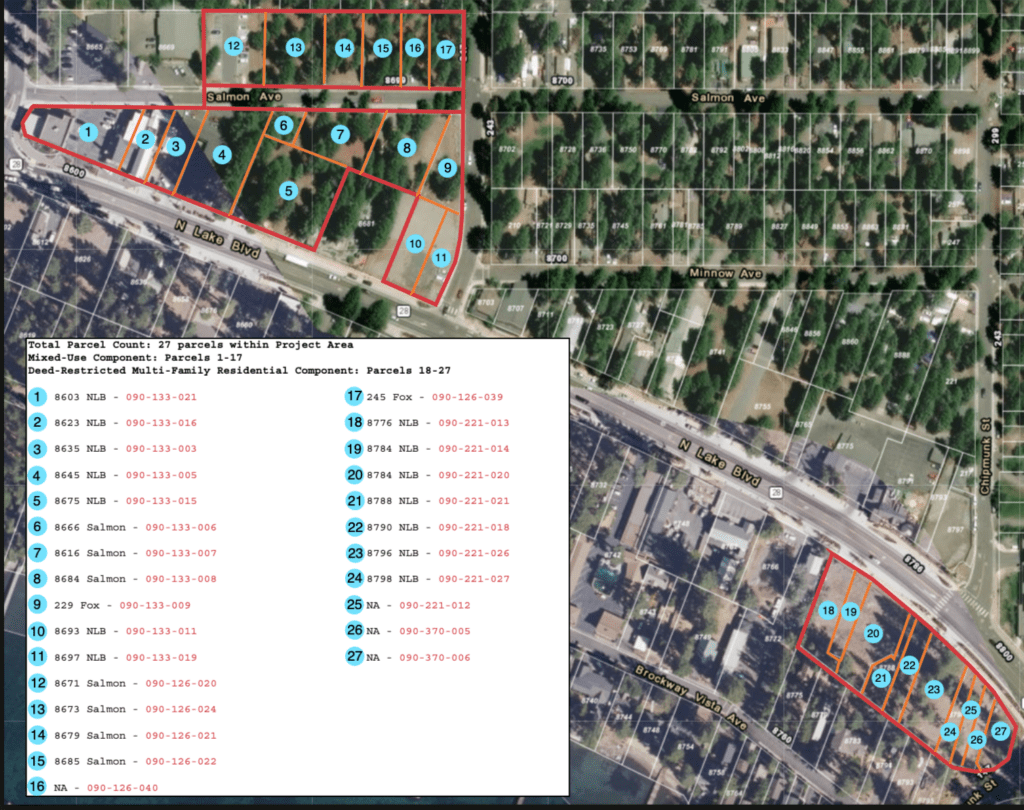
Within this framework, the Kings Beach Center & Eastern Gateway property — now proposed for the 39° North project — has long been understood as a central anchor site for the Town Center.
Development on this site is therefore expected to do more than simply occupy the land. It is expected to help anchor the character and structure of the district itself.
In practical terms, the plans established expectations about how development should shape the everyday experience of the Town Center — how buildings frame the street, how people move through the district, and how public life unfolds at ground level.
These plans effectively set the yardstick for evaluating redevelopment proposals.
The February 24 design review provided the clearest opportunity yet to see how the current proposal performs against those expectations in practice, particularly as the project approaches its next milestone under the Fourth Amendment agreement between the County and the developer. That milestone will determine whether the project advances toward formal approvals.
With that framework in mind, the committee began its review by examining one of the most visible elements of the proposal: the scale of the hotel building.
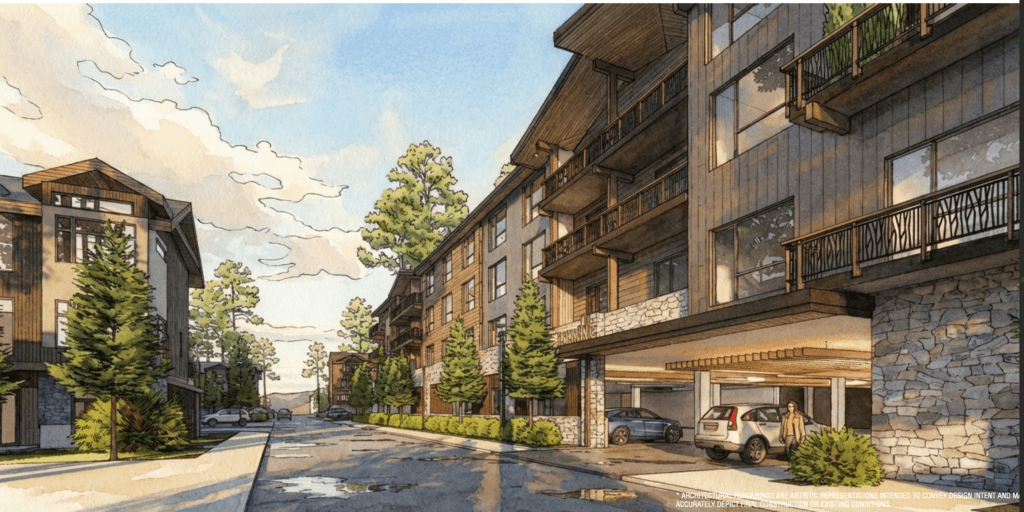
1 — How Does a 445-Foot Building Fit the Town Center Pattern?
The meeting opened with a discussion of the proposed hotel’s scale and how it fits within the Town Center block pattern.
The Length of the Proposed Hotel
Early in the meeting, the scale of the proposed hotel became the first issue under discussion.
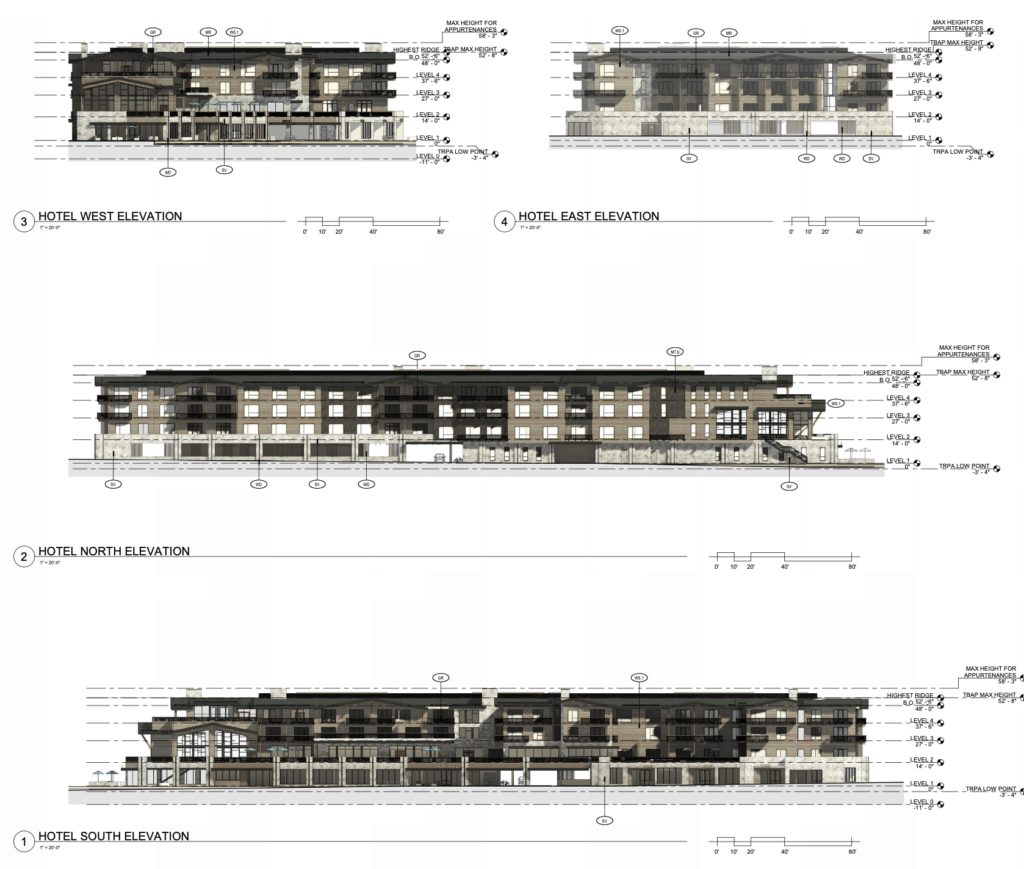
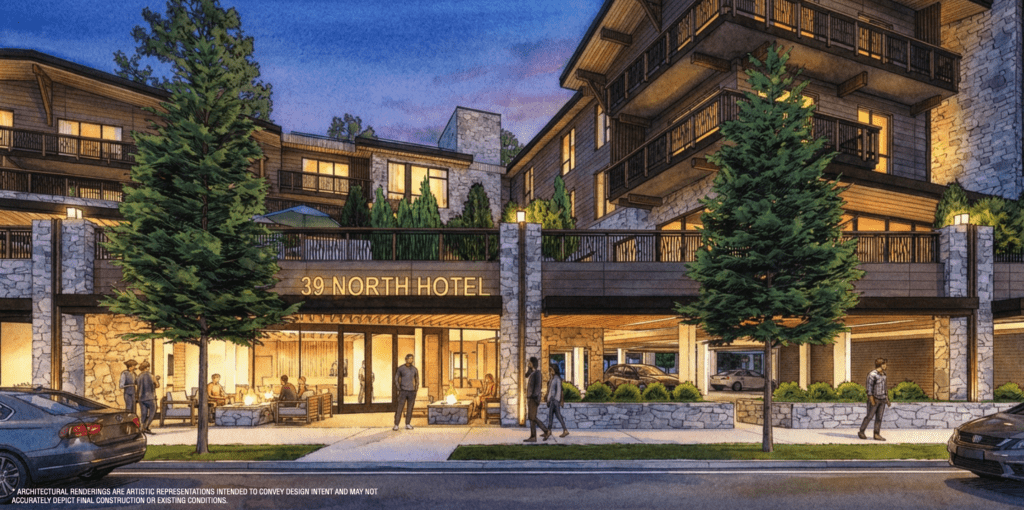
As presented, the building stretches roughly 445 feet in length.
That number drew attention because the Town Center framework generally anticipates building segments closer to 250 feet in length.
The discussion turned to what that difference means in practice.
Would the structure function as a single large building, or read as several smaller buildings along the street?
Can Articulation Change How the Building Reads?
The design team described several architectural strategies intended to reduce the perceived length of the building, including façade breaks, material changes, and stepped building volumes.
The goal was to create the impression of multiple smaller buildings rather than one uninterrupted structure.
Committee members repeatedly returned to a practical question:
Would pedestrians experience several buildings along the street — or a single continuous mass?
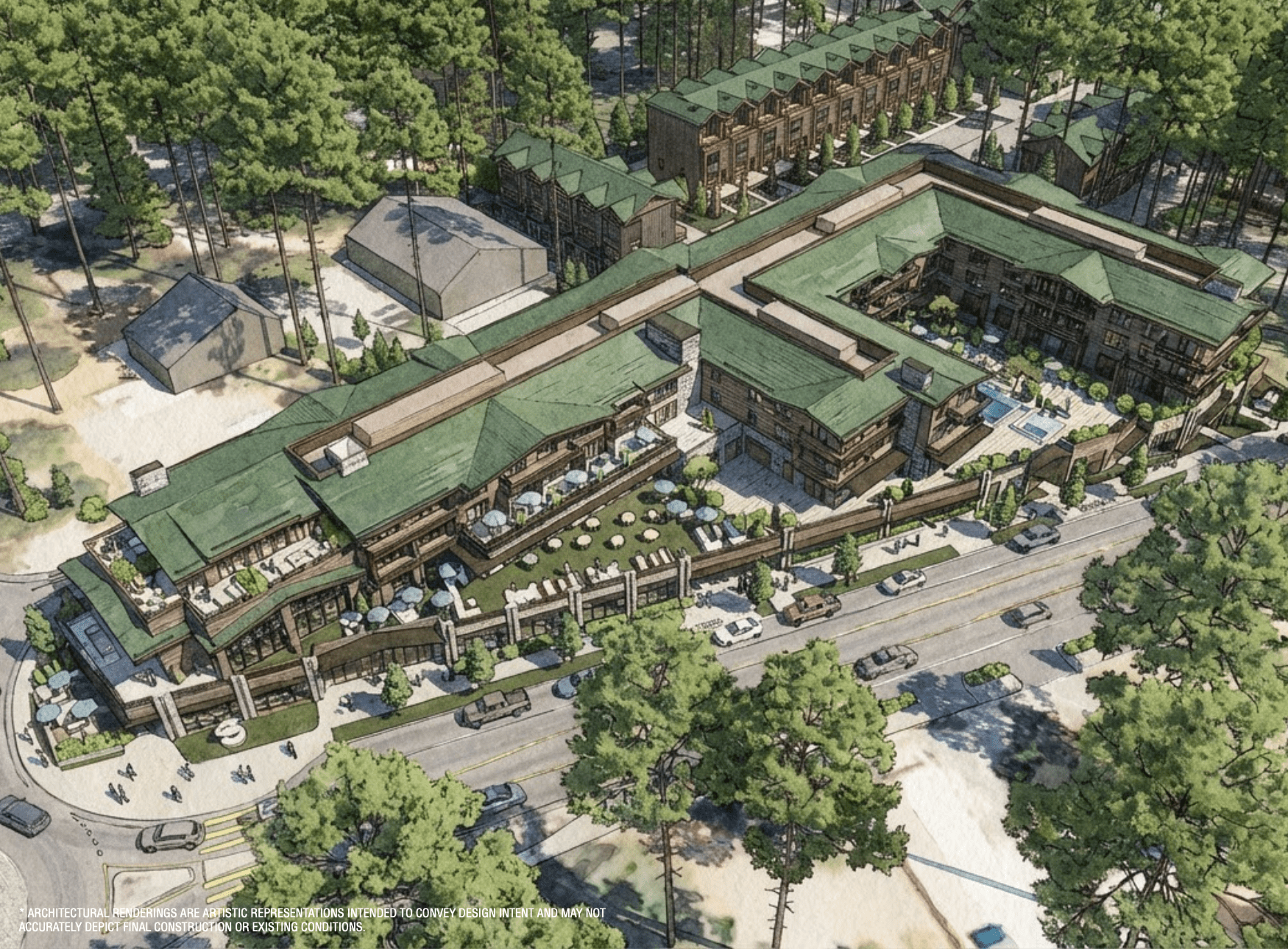
As the discussion continued, another factor shaping the building became increasingly clear: the hotel sits above a large structured parking podium, and that podium drives much of the building’s footprint and organization.
Because the parking structure establishes the base of the development, it influences where entrances occur, how circulation moves through the site, and how the building mass meets the street.
Several committee members suggested that the design team continue examining how the podium configuration affects the pedestrian experience of the block — including how the base of the building interacts with the sidewalk and how façade breaks are organized above it.
From there, the discussion expanded beyond the building itself to how the site functions as part of the Town Center block.
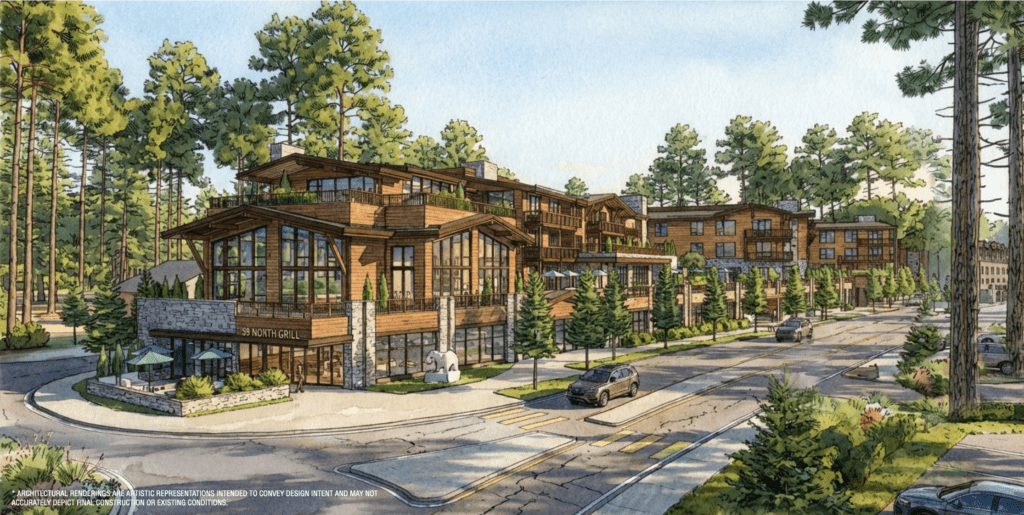
2 — Does the Site Function as a Connected Town Center Block?
After examining the scale of the hotel building, the committee turned to a broader question: how the overall site functions within the Town Center district.
Parking and Building Organization
As the layout of buildings, parking, and circulation was described, the discussion turned to how people would move through the block.
The hotel sits above a structured parking podium, which influences the building footprint, entrances, and circulation across the site.
Parking in this configuration influences more than vehicle storage. It also affects the building footprint, the placement of entrances, and how circulation occurs across the site.
Circulation and Connections Through the Block
The design team described several internal pedestrian passages intended to allow people to move between streets through the development.
Committee members asked how those routes would function in practice.
Would they operate as visible public connections within the Town Center — routes that people naturally move through as part of the neighborhood — or feel more like internal corridors serving the development itself?
Members explored how clearly these connections would link North Lake Boulevard to Salmon Avenue and whether pedestrians would perceive them as part of the Town Center street network or primarily as circulation within the hotel complex.
Several members also questioned how visible these routes would be to people approaching from surrounding streets, noting that internal passages can function very differently in practice than they appear on plans.
The site’s location along Highway 28 also became part of the discussion.
One edge of the development faces a regional roadway, while the interior is intended to function as part of the Town Center district.
Members examined how visitors arriving from the highway transition into the development and how the project connects to surrounding streets.
Together, these questions reflected a broader effort to understand whether the development functions as a connected Town Center block or a more inward-focused complex organized around internal circulation.
That question naturally led to another dimension of Town Center design: what happens at street level.
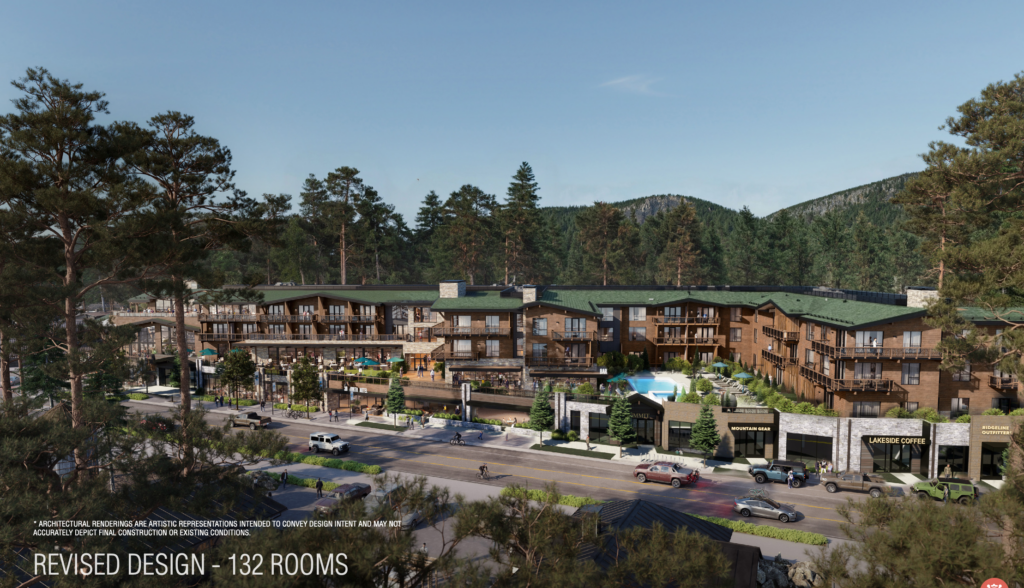
3 — Will the Project Create Street Life or Internal Activity?
Street activity is a defining feature of Town Center districts.
In walkable environments, ground floors play a central role in shaping how people experience a place.
Storefronts, cafés, gathering spaces, and visible entrances create reasons for people to move along sidewalks and spend time in public areas.
Ground-Floor Commercial Activity
As the design team described the building program, committee members asked about the presence and distribution of commercial space.
Ground-floor commercial uses often activate streets by creating storefronts and pedestrian destinations.
Members explored where these uses would be located and how they would connect to primary pedestrian routes within the Town Center.
When Activity Moves Inward
As courtyards and interior gathering areas were described, another pattern began to emerge.
Several members noted that this distinction reflected a broader question the committee was testing throughout the meeting — whether the project functions as an extension of the Town Center street network or as a more inward-focused complex organized around internal activity.
This prompted questions about whether those spaces would function as visible parts of the Town Center — contributing to the life of surrounding streets — or primarily serve activity internal to the hotel and associated uses.
The distinction matters because Town Center districts depend on public-facing activity at the street level, where everyday movement and gathering help shape the character of the district.
From there, the committee shifted its attention to another question: what daily life might look like for people living within the development itself.
4 — What Would It Feel Like to Live Here?
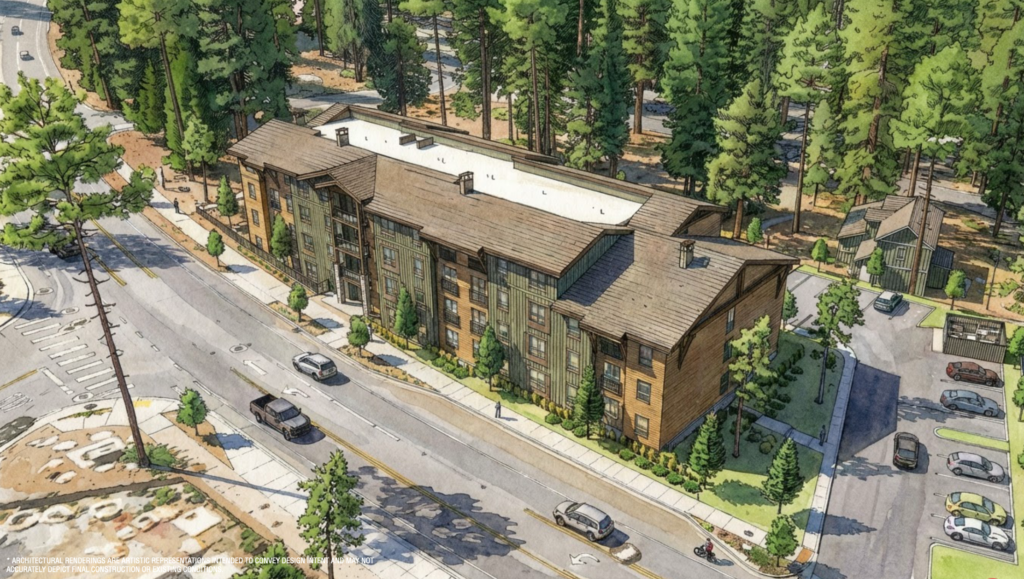
When the committee turned to the achievable housing component, the discussion shifted toward the day-to-day experience of residents.
Housing Along the Highway 28 Corridor
As the design team described the residential building, it became clear that the housing component sits along the Highway 28 edge of the site.
That location prompted questions about the residential environment associated with the units.
Members explored how residents might experience:
• traffic noise
• proximity to the highway corridor
• day-to-day living conditions along a regional roadway
Housing Within the Larger Development
The housing building forms part of the same development structure that includes the hotel, the parking podium, and other program elements on the site.
This prompted a practical question from the committee:
Is the housing located where it best supports residential living — or where it fits most easily within the broader layout of the project?
The conversation reflected a broader consideration about how housing integrates into a mixed-use Town Center environment, where residential life, visitor accommodations, and commercial activity all intersect within the same block.
5 — How Does the Condo-Hotel Model Function?
A Hybrid Building Type
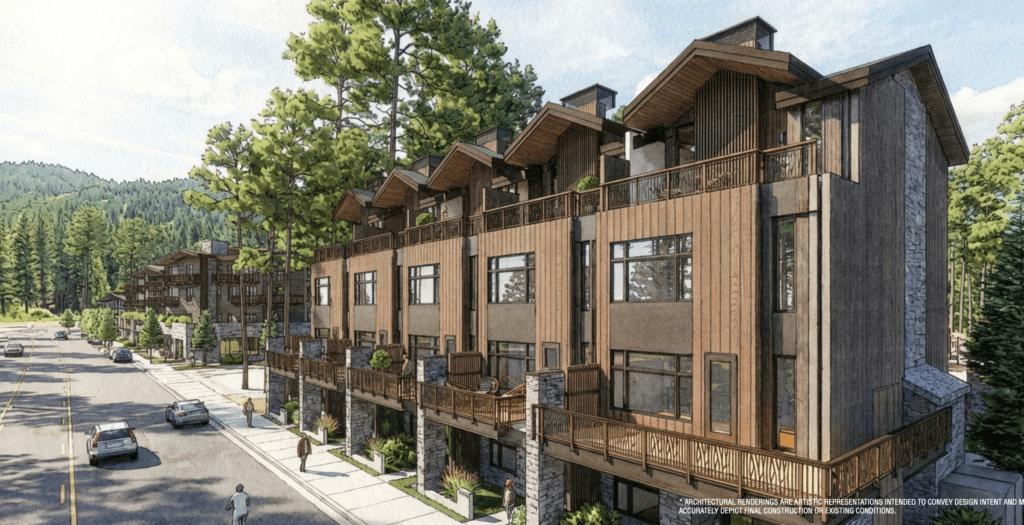
The condo-hotel townhomes portion of the development introduced a hybrid ownership model. Units would be individually owned while also participating in a hotel-style rental program.
Committee members explored how that hybrid arrangement could affect both operations and daily life within the project.
Ownership and Day-to-Day Use
Members questioned how occupancy patterns might shift over time:
• how often units are occupied by owners versus visitors
• how shared spaces and circulation function under mixed occupancy
• how the rhythm of the building could affect surrounding streets
These discussions highlighted that the condo-hotel structure adds operational complexity, requiring careful consideration of how residential and visitor uses coexist.
Interpreting the Building’s Height
Questions also arose about how the building’s height and floor count should be interpreted depending on how lower levels are counted.
Several members noted that depending on how the lower levels are interpreted, portions of the building could ultimately read as four full stories from the street — a detail that affects how the project’s scale is perceived at the pedestrian level.
6 — How Will Sun and Winter Conditions Shape the Block?
Sunlight and Building Mass
Beyond building design, the committee examined how the project might shape the environmental experience of the block throughout the year.
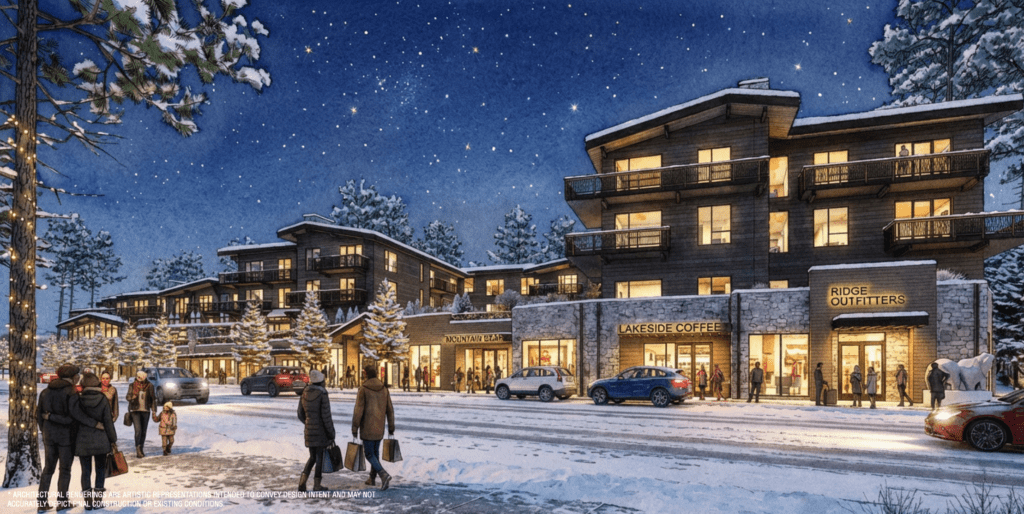
Members discussed how the length and height of the hotel could cast shadows on pedestrian pathways, courtyards, and street-level gathering areas.
Winter Conditions and Year-Round Use
In winter, shaded areas can remain colder and icy longer.
Committee members noted that such conditions could affect pedestrian comfort and access, particularly along Salmon Avenue — home to the Kings Beach Post Office — where pedestrian access, deliveries, and everyday street activity occur directly across from the project site.
The conversation emphasized that building mass and orientation directly influence how outdoor spaces function across seasons, affecting residents, visitors, and local businesses alike.
7 — How Do the Town Center Rules Apply to This Project?
Variances and Site Constraints
One committee member highlighted that variances are typically tied to unique physical characteristics of a site rather than design decisions, noting they had “never been allowed to ask for a variance on a raw piece of ground.”
The remark reflected questions about how variance findings apply to large redevelopment proposals.
Mixed-Use Subdistrict Interpretation
County staff explained that the hotel, condo-hotel, and housing components are being reviewed together as a single contiguous mixed-use development rather than as separate projects.
Members explored how that interpretation relates to the Town Center goal of a village-scale pattern of multiple buildings and active streets.
Building Form and Modulation
Members repeatedly returned to how the building would read at the street level for pedestrians.
The design team described façade articulation and stepped volumes intended to break down the building’s mass.
Building Length Standards
During public comment, one speaker referenced Table 2.04.A-4 of the Tahoe Basin Area Plan implementing regulations, which establishes a base maximum building length of 250 feet in Town Center subdistricts.
The table allows building length to extend up to 500 feet only if specific mixed-use, housing, and design conditions are met and approved by the TBDRC.
With the proposed hotel extending roughly 445 feet, the comment raised questions about how those standards are interpreted when evaluating larger mixed-use developments.
The committee did not make a determination on these issues during the meeting, but the discussion highlighted ongoing questions about how the Town Center framework applies when a single project occupies a large portion of a central block.
8 — What Did the Committee Ultimately Clarify?
As the three-hour meeting drew to a close, the committee stepped back from individual topics and reflected on the proposal more broadly and the questions it raised.
Members had examined the project through several lenses:
• building scale and block length
• site organization and circulation
• street-level activity
• housing livability
• hybrid ownership models
• environmental conditions
• interpretation of the Town Center framework
The discussion did not produce final conclusions.
Instead, it clarified where additional refinement may be needed and which issues remain open as the project continues through the review process.
The Decision Path Ahead
While the February 24 meeting focused on design questions, the project is also approaching an important procedural milestone.
In December 2023, Placer County and the developer adopted a Fourth Amendment establishing a milestone framework intended to guide the project toward environmental review.
The next milestone in that framework occurs in March 2026.
During the meeting, County staff indicated the project may proceed through a Tahoe Basin Area Plan conformity review rather than a separate project-level environmental review process.
That distinction matters because the two pathways evaluate projects in different ways.
Project-level environmental review typically examines alternatives and broader environmental impacts before approvals are considered.
A Tahoe Basin Area Plan conformity review instead focuses on whether a proposal complies with the development standards and policies contained in the adopted area plan.
In that context, how those standards are interpreted — including building length, mixed-use configuration, and pedestrian design — becomes central to the project’s evaluation.
What This Moment Reveals
Taken together, the February 24 design review offered an early look at how the current proposal performs within the Town Center framework guiding development in Kings Beach.
Committee members examined the project from multiple angles — building scale, site organization, street activity, housing livability, environmental conditions, and interpretation of development standards.
Healthy town centers rarely emerge from a single development alone. They evolve through many decisions over time — investments in public space, local businesses, housing, and buildings that support everyday life in the district.
The February 24 discussion offered an early look at how this proposal is being tested against those principles.
As the review process continues, the central question remains whether redevelopment of this site contributes to the walkable, active Town Center envisioned for Kings Beach.
Future articles in this series will take a closer look at how the Town Center standards themselves are structured and how they are intended to guide redevelopment of key sites in Kings Beach.
Leave a Reply